Disposal of Wind Turbine Blades

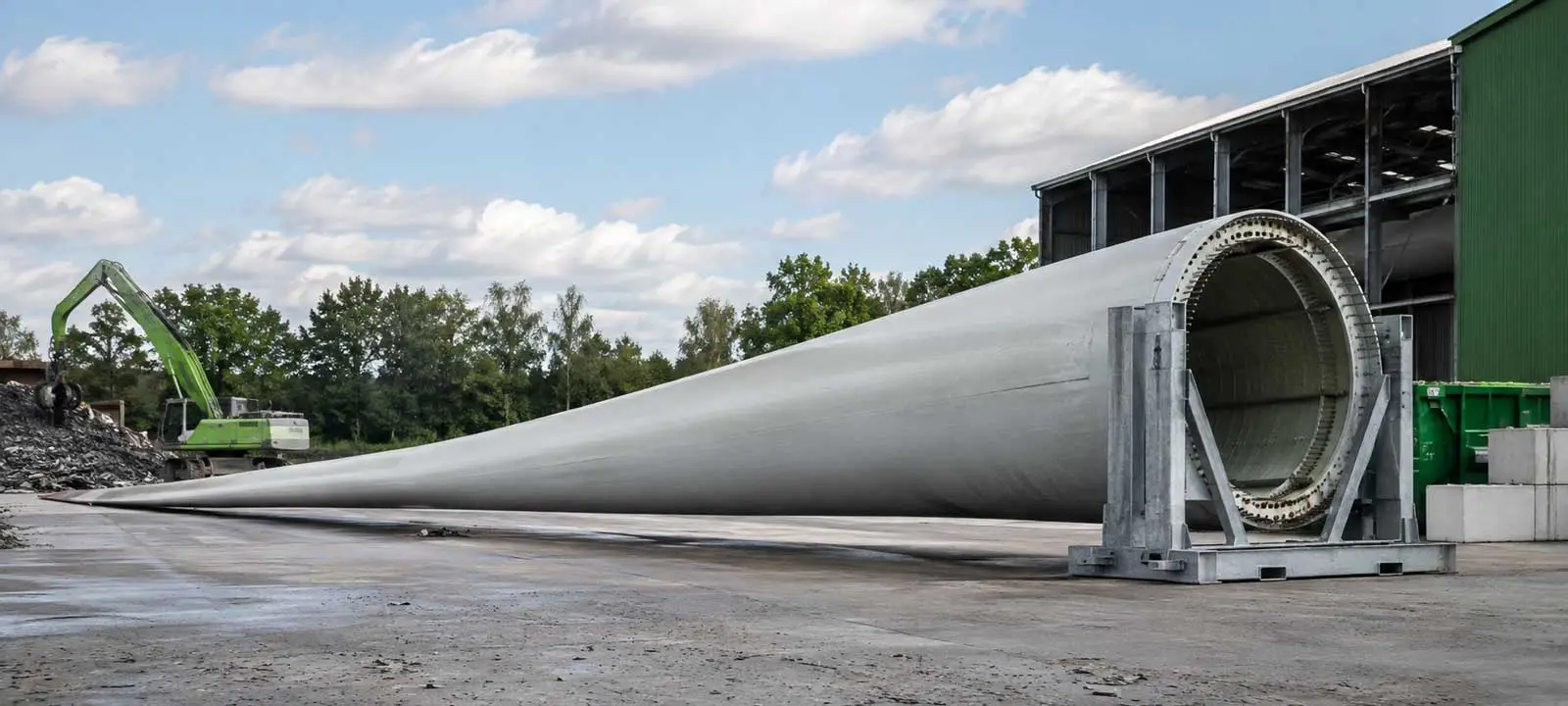
The disposal of wind turbine blades represents one of the most challenging processes—both legally and operationally—for wind power plants and turbine manufacturers. Composed of layers of thermoset epoxy resin and glass or carbon fiber, these massive composite structures do not decompose in nature for centuries and cannot be broken down or recycled using conventional methods. Beysu processes end-of-life wind blades and manufacturing scrap at its integrated facility—which adheres to strict environmental and occupational safety standards—transforming them into high-quality alternative energy sources for industry.

Industrial Shredding and Granulometric Size Control

These rigid composite structures, weighing tons and spanning tens of meters in length, are sized on-site using specialized engineering techniques after being classified in accordance with the Waste Management Regulation. Blade sections delivered to our facility are processed through Beysu’s sequential, three-stage industrial crushing systems. Using this specialized, high-strength machinery, the fiberglass and rigid resin components are reduced to the ideal particle size required for the kiln feed systems of cement plants.

Powerful Energy for the Cement Sector with High Calorific Value

The polymers and resins found in the structure of wind turbine blades possess a very high calorific value. These composite granules—whose calorific value, chlorine, and heavy metal parameters are meticulously analyzed at the Beysu Laboratory—are fed into our Refuse-Derived Fuel (RDF) production lines in accordance with kiln firing specifications. This high-energy alternative fuel reduces the heavy industry's carbon footprint by replacing primary fossil fuels, such as coal and petcoke, in cement rotary kilns.

Complete Legal Assurance with MoTAT and KDS Systems

The transfer of decommissioned wind turbine blade waste from wind farm sites to our facility is monitored in real-time via the Ministry’s MoTAT (Mobile Waste Tracking System) infrastructure. All quantities of composite material entering our facility through the logistics flow are officially recorded through integration with the KDS (Mass-Balance System). This ensures that the carbon-neutral and zero-waste goals of our business partners investing in renewable energy are legally safeguarded, preventing any data discrepancies during environmental audits.

Get a quote for this service

Contact us now for customized solutions.

Shopping Basket